

Blog
MOTS-c vs. SS-31: Key Differences in Mitochondrial Research

Mitochondrial research comparison
Two approaches to mitochondrial biology.
MOTS-c
SS-31
Simplified research map based on the references below. Mechanisms do not establish clinical benefit or combination effects.
MOTS-c and SS-31 are two peptides attracting scientific interest for their connections to mitochondrial biology. But despite appearing in similar research discussions, they operate through fundamentally different mechanisms.
MOTS-c is a naturally occurring mitochondrial-derived signaling peptide associated with cellular energy regulation and metabolic adaptation. SS-31, also known as elamipretide, is a synthetic peptide that interacts with cardiolipin in the inner mitochondrial membrane.
Understanding these differences is essential when examining research involving mitochondrial function, cellular stress, and energy metabolism.
In this guide, we’ll explore what makes each peptide unique, how their mechanisms differ, and what published research tells us.
Why Mitochondria Matter in Cellular Research
Mitochondria are commonly described as the powerhouses of the cell because they produce much of the ATP used to support cellular activity.
However, mitochondrial biology extends far beyond energy production.
These organelles also participate in:
- Cellular signaling and metabolic regulation
- Reactive oxygen species (ROS) production and management
- Calcium homeostasis
- Programmed cell death
- Cellular responses to environmental and metabolic stress
Mitochondrial dysfunction is therefore an important area of investigation across metabolism, aging, and numerous diseases.
Two distinct research approaches involve studying the signals that coordinate cellular metabolism and investigating the structural environment that supports mitochondrial energy production.
MOTS-c and SS-31 illustrate these different approaches.
What Is MOTS-c?
MOTS-c, short for mitochondrial open reading frame of the 12S rRNA-c, is a 16-amino-acid peptide encoded by mitochondrial DNA.
First characterized in a landmark 2015 study, MOTS-c helped establish that mitochondrial DNA can encode biologically active signaling peptides in addition to its better-known roles.
How MOTS-c Works
Research suggests MOTS-c influences metabolic regulation through pathways involving AMP-activated protein kinase (AMPK).
AMPK is a cellular energy sensor that helps coordinate responses to changing energy availability.
Experimental studies have linked MOTS-c with:
- AMPK-associated metabolic signaling
- Glucose metabolism and insulin sensitivity in animal models
- Cellular adaptation to metabolic stress
- Nuclear signaling and stress-responsive gene expression
- Skeletal muscle mitochondrial bioenergetics
An especially interesting characteristic is MOTS-c’s ability to participate in communication between mitochondria and the nucleus.
Under certain stress conditions, MOTS-c can relocate to the nucleus and influence the expression of genes associated with cellular adaptation.
This makes MOTS-c an important subject for researchers investigating how mitochondrial signals influence broader cellular behavior.
What the Research Shows
Early mouse studies demonstrated changes in metabolic regulation following experimental MOTS-c administration.
A 2026 study further investigated MOTS-c and skeletal muscle mitochondrial bioenergetics, reporting improvements in several mitochondrial functional measures in mouse models dependent on AMPK and PGC-1α.
These findings expand the scientific understanding of MOTS-c, but animal and cellular results should not be interpreted as established clinical benefits in humans.
What Is SS-31 (Elamipretide)?
SS-31 is a synthetic, mitochondria-targeting tetrapeptide also known as elamipretide.
Unlike MOTS-c, SS-31 is not a naturally encoded mitochondrial signaling peptide.
Instead, its molecular structure enables interactions with components of the mitochondrial inner membrane.
How SS-31 Works
A central feature of SS-31 research is its interaction with cardiolipin, a specialized phospholipid concentrated in the inner mitochondrial membrane.
Cardiolipin contributes to mitochondrial membrane architecture and the organization of proteins involved in energy production.
SS-31 binds cardiolipin and can influence mitochondrial membrane structure and function.
Research has investigated its relationship with:
- Inner mitochondrial membrane organization
- Electron transport chain function
- Mitochondrial morphology
- Cellular bioenergetics
- Oxidative stress under experimental conditions
Rather than acting primarily as a metabolic signaling peptide, SS-31 is studied for its direct interaction with the mitochondrial membrane environment.
An Important Clinical Development
In 2025, the FDA granted accelerated approval to elamipretide under the brand name Forzinity for improving muscle strength in adults and pediatric patients with Barth syndrome weighing at least 30 kg.
Barth syndrome is a rare genetic disorder involving abnormalities in cardiolipin metabolism and mitochondrial function.
This approval applies to a specific regulated prescription product and indication. It does not establish that research-grade SS-31 products are equivalent to the approved medication, nor does it establish broad benefits for healthy individuals or other conditions.
MOTS-c vs. SS-31: Key Differences
Although both peptides are connected to mitochondrial research, they differ in origin, structure, and primary mechanisms.
| Characteristic | MOTS-c | SS-31 |
|---|---|---|
| Peptide type | Naturally encoded mitochondrial-derived peptide | Synthetic mitochondria-targeting peptide |
| Length | 16 amino acids | 4 amino acids |
| Primary research focus | Metabolic signaling and stress adaptation | Mitochondrial membrane interactions |
| Important mechanism | AMPK-associated signaling | Cardiolipin binding |
| Cellular activity | Metabolic regulation and nuclear signaling | Inner mitochondrial membrane organization |
| Clinical status | Investigational | Specific FDA-approved prescription formulation; approval does not extend to research-grade SS-31 |
The central distinction: MOTS-c is primarily investigated as a regulator of cellular energy signaling, while SS-31 is studied for its interaction with the mitochondrial membrane.
These mechanisms are different, and neither peptide should be considered a substitute for the other.
Shop MOTS-c and SS-31 research listings
Review the individual VB listings for current quantities, availability and batch documentation. Choose the identity specified by your laboratory method.
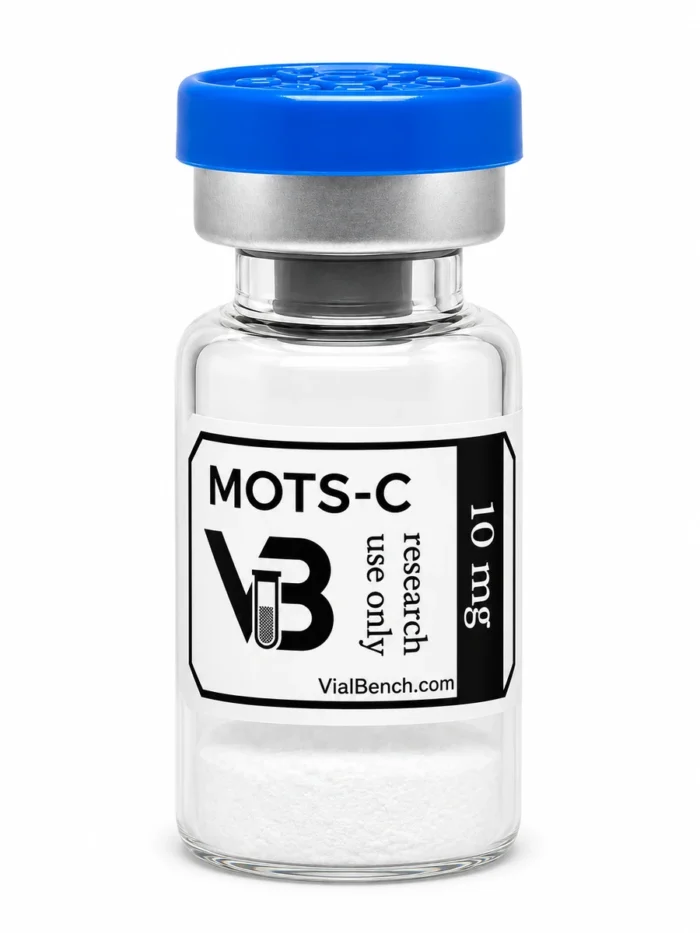
VB-MOTS-C
MOTS-c research material. Listed options: 10 mg and 40 mg. Review the selected quantity and applicable COA before ordering.
View VB-MOTS-C & purchase options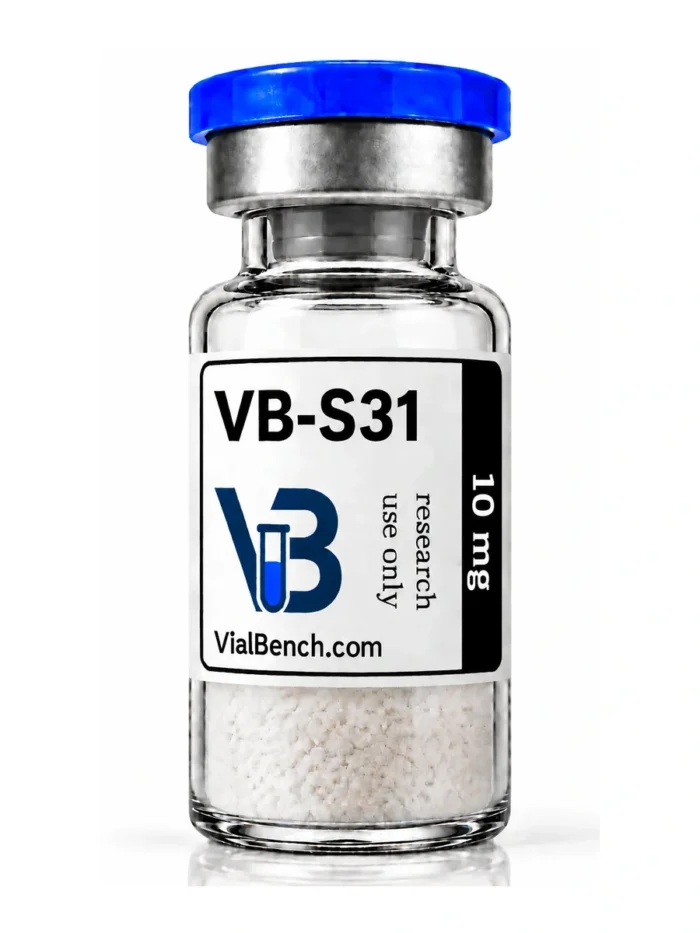
VB-S31
SS-31 research material. Listed options: 10 mg and 50 mg. This research-grade material is not prescription elamipretide.
View VB-S31 & purchase optionsLaboratory research only; not for human or animal use. Research-grade SS-31 is not equivalent to FDA-approved prescription elamipretide. Current pricing and availability appear on the live product pages.
Why Researchers Study Both Peptides
Mitochondrial function depends on multiple interconnected systems.
Cellular metabolism must respond to changes in energy demand, while mitochondrial membranes must maintain the structural conditions needed for efficient energy production.
MOTS-c research provides insight into how mitochondrial-derived signals participate in metabolic adaptation.
SS-31 research provides insight into how mitochondrial membrane interactions can affect organelle function.
Studying these distinct mechanisms helps researchers build a more complete understanding of mitochondrial biology.
However, the fact that both peptides relate to mitochondrial function does not establish that combining them produces complementary or synergistic effects. Such claims require direct experimental evidence.
What Questions Remain?
Despite growing scientific interest, important questions remain.
For MOTS-c, researchers continue investigating the relationship between endogenous signaling, experimentally administered peptide, and human physiology.
For SS-31, ongoing scientific questions include how findings from particular disease models translate across different biological settings.
In both cases, study design, experimental conditions, and the distinction between preclinical and clinical evidence matter.
Future research may clarify additional mechanisms and applications, but conclusions should remain grounded in the available evidence.
Final Thoughts: Different Mechanisms, Shared Scientific Interest
MOTS-c and SS-31 represent two different ways scientists investigate mitochondrial biology.
MOTS-c highlights the importance of mitochondrial signaling in cellular metabolism and stress responses.
SS-31 highlights the relationship between mitochondrial membrane structure and organelle function.
Together, their research illustrates how mitochondrial health involves more than ATP production alone.
For researchers studying mitochondrial biology, understanding these mechanisms provides a useful foundation for interpreting published findings and identifying new scientific questions.
Explore MOTS-c Research Materials Explore SS-31 Research Materials
Review current purchasing options and documentation on the product pages or visit the COA library.
Research materials are intended for appropriate laboratory research only. Research-grade products are not approved prescription medications and are not intended for human or veterinary administration.
Frequently Asked Questions
Are MOTS-c and SS-31 the same peptide?
No. MOTS-c is a naturally encoded 16-amino-acid mitochondrial-derived peptide. SS-31 is a synthetic four-amino-acid peptide that interacts with the inner mitochondrial membrane.
What is the main difference between MOTS-c and SS-31?
MOTS-c is primarily associated with cellular metabolic signaling, including AMPK-related pathways. SS-31 is associated with cardiolipin binding and mitochondrial membrane function.
Is SS-31 also called elamipretide?
Yes. SS-31 is commonly referred to as elamipretide in scientific and clinical literature.
Is MOTS-c FDA approved?
MOTS-c is not an FDA-approved medication. Its potential applications remain investigational.
Is SS-31 FDA approved?
A specific prescription formulation of elamipretide, marketed as Forzinity, received FDA accelerated approval in 2025 for a defined Barth syndrome indication. This approval does not extend to research-grade SS-31 products.
Can MOTS-c and SS-31 be considered interchangeable?
No. Their structures and principal mechanisms differ, and available evidence does not support treating them as interchangeable compounds.
Scientific References
- Lee et al. (2015), Cell Metabolism — foundational MOTS-c research.
- Wan et al. (2023), Journal of Translational Medicine — MOTS-c mechanisms and metabolic signaling.
- Gudiksen et al. (2026), Free Radical Biology and Medicine — MOTS-c and skeletal muscle mitochondrial bioenergetics.
- FDA prescribing information for Forzinity (2025) — elamipretide mechanism and regulatory status.